Toolbox Talk: Wearing Hearing Protection Properly
A 5-minute toolbox talk for BC supervisors and crew leads. Read it out, or use the key points as prompts. Free to print and use.
Why this matters
Noise-induced hearing loss is permanent, painless and slow. Nobody notices it happening, which is why it is one of the most common workplace injuries in BC. Hearing protection works, but only if it is worn properly and worn the whole time the noise is on. An earplug pushed halfway in protects far less than the number printed on the box.
Key points to cover
- Foam earplugs: roll the plug into a thin, tight cylinder. Reach over your head with the other hand, pull the top of your ear up and back, and slide the plug in. Hold it for 20 to 30 seconds while it expands. Done right, very little of the plug sticks out.
- Check the fit: in a noisy area, cup your hands tightly over your ears. If the noise drops a lot, the plugs are not sealing. Take them out and refit.
- Earmuffs: the cushions need to seal all the way around the ear. Safety glasses arms, hoodies, hats and long hair under the cushion all break the seal. Use thin-arm glasses where you can.
- Wear it the whole time: taking protection off for even a few minutes in loud noise wipes out a large share of the protection you got over the whole shift.
- Keep it clean: throw away foam plugs that are dirty or no longer expand. Replace muff cushions when they crack or go flat.
- Speak up: if your protection is uncomfortable, does not fit or makes it hard to hear alarms, tell your supervisor. There are other styles that may suit you better.
Quick demo
Hand out a few foam earplugs. Have everyone fit one plug while you talk them through roll, pull, insert and hold. Then have them compare how loud the room sounds with a properly fitted plug versus one that is just pushed in. Most people notice the difference straight away.
Rule of thumb
If you have to raise your voice to talk to someone an arm's length away, the noise is probably loud enough to need hearing protection.
Questions to ask your crew
- Where on this site do you need hearing protection?
- What makes it hard to keep your protection on all shift?
- Has anyone noticed ringing in their ears after work? (That is a warning sign, not something to ignore.)
Record it
Write down the date, the topic and who attended, and keep it with your safety records. It shows your hearing conservation program is being taught, not just written down.
Where Clear Work fits
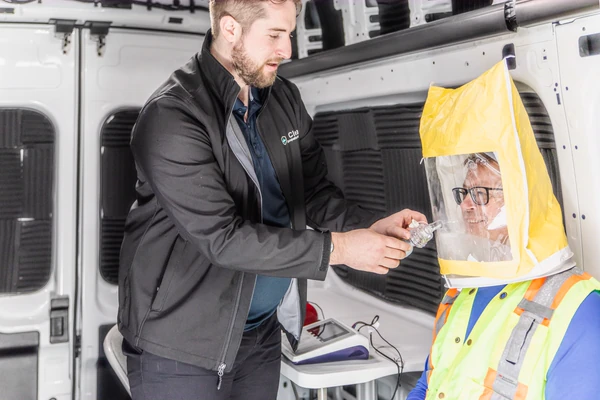
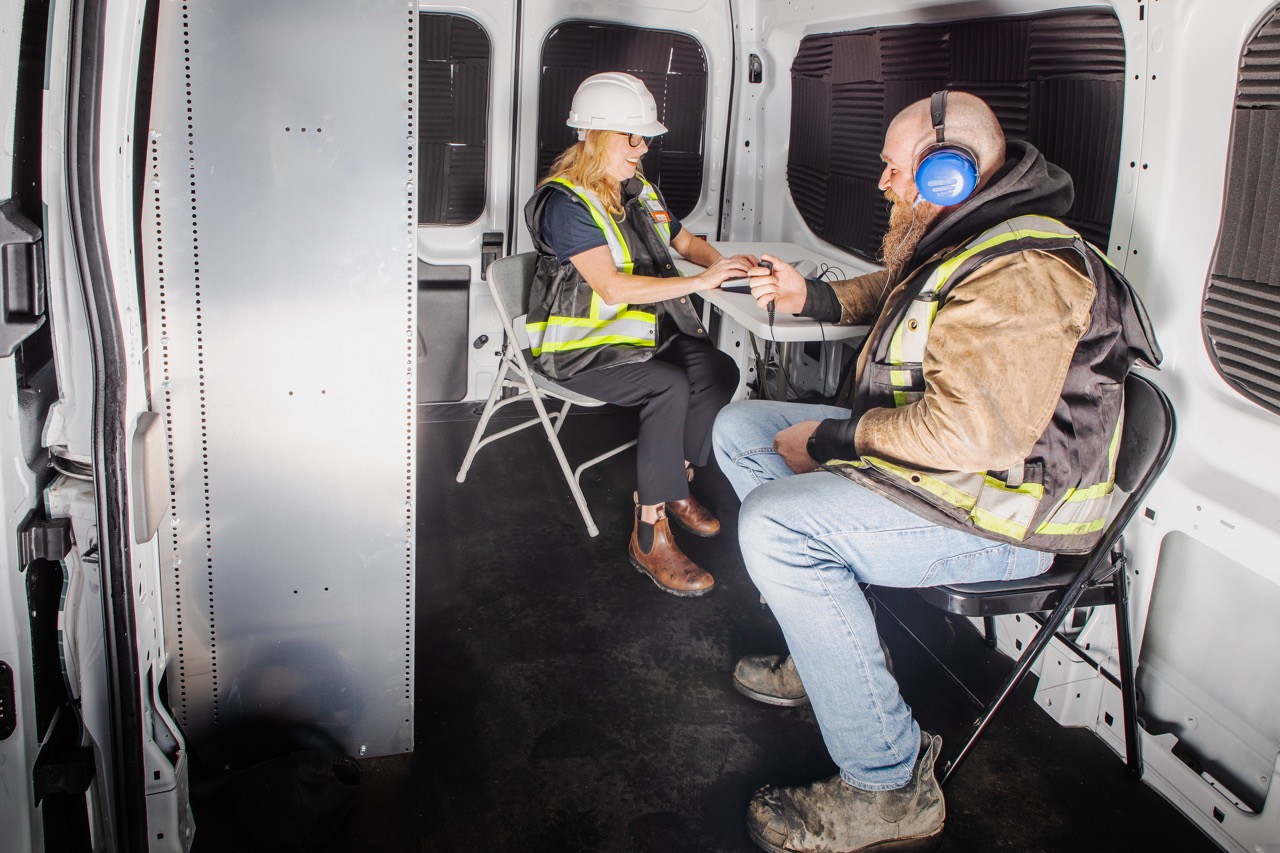
Hearing protection is one part of a hearing conservation program. In BC, workers exposed above the noise limits also need a hearing test within 6 months of starting and every year after. We bring WorkSafeBC-authorized hearing testing to your site in our mobile van, and each test includes a chance to check the worker is wearing their protection properly.
Read more: what 85 dBA Lex means and the 6-month new-hire deadline. More talks in our free toolbox talk library.
This toolbox talk is general safety information. Follow your own hearing conservation program and the current WorkSafeBC OHS Regulation.