WorkSafeBC Noise Exposure Limits Explained: What 85 dBA Lex Means for BC Employers
If your workers run saws, compressors, grinders or heavy equipment, there is a good chance some of them are above BC's noise limits. Here is what the limits mean and what WorkSafeBC expects you to do about them.
The two BC noise limits
Section 7.2 of the Occupational Health and Safety Regulation sets two limits. A worker must not be exposed to more than:
- 85 dBA Lex: the worker's daily noise exposure, averaged over a full workday and expressed as an 8-hour equivalent
- 140 dBC peak: the loudest single instant of sound, such as a nail gun or a hammer on steel
Why 85 dBA is not "85 decibels, all day"
Lex is an average, and noise in decibels does not add up the way most people expect. BC uses a 3 dB exchange rate: every 3 dB increase halves the time a worker can safely spend at that level. According to the Canadian Centre for Occupational Health and Safety, that works out to:
- 85 dBA for 8 hours
- 88 dBA for 4 hours
- 91 dBA for 2 hours
So a worker who spends a couple of hours near a loud machine can reach the daily limit even if the rest of the shift is quiet.
When you have to measure noise: 82 dBA
Under section 7.3, you must measure noise if workers are or may be exposed to potentially harmful noise, or if there is any indication they may be exposed above 82 dBA Lex, which is below the limit itself. Measurement has to follow CSA Standard Z107.56, and you must explain the results to the workers affected.
A workplace noise survey is how you find out which workers and areas are over the limit. It also tells you which workers need hearing tests.
What you need once workers are over the limit
If workers are exposed above either limit, section 7.5 requires a noise control and hearing conservation program that includes:
- Noise measurement
- Education and training for workers
- Engineered noise controls where practicable
- Hearing protection that meets CSA Standard Z94.2, worn properly
- Posted warning signs in noise hazard areas
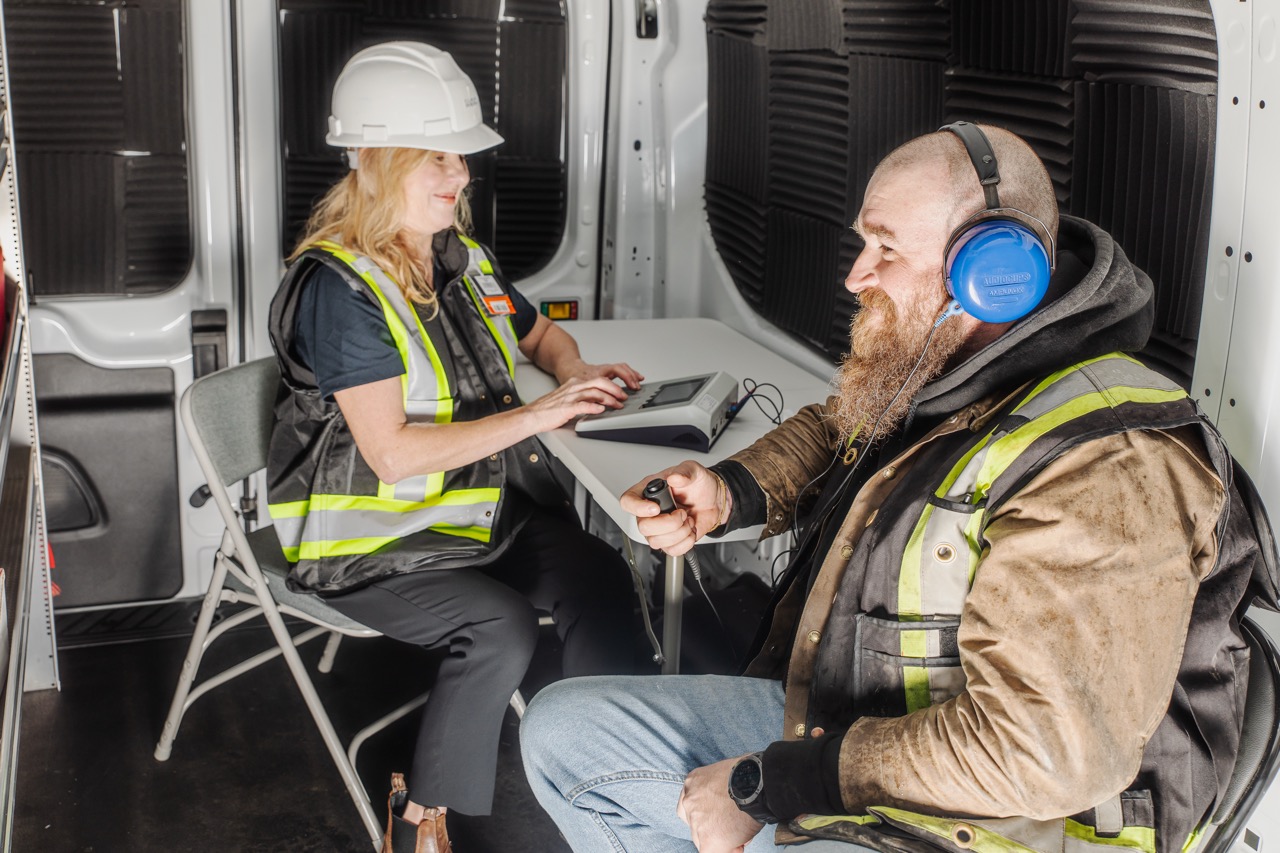
- Hearing tests, by a tester authorized by WorkSafeBC
- An annual review of the program
Hearing tests: new hires and every year
Section 7.8 requires each worker exposed above the limits to have a hearing test as soon as practicable after starting, and no later than 6 months after their start date, then at least once every 12 months. Read why the 6-month new-hire deadline is easy to miss.
Getting it done without losing a shift
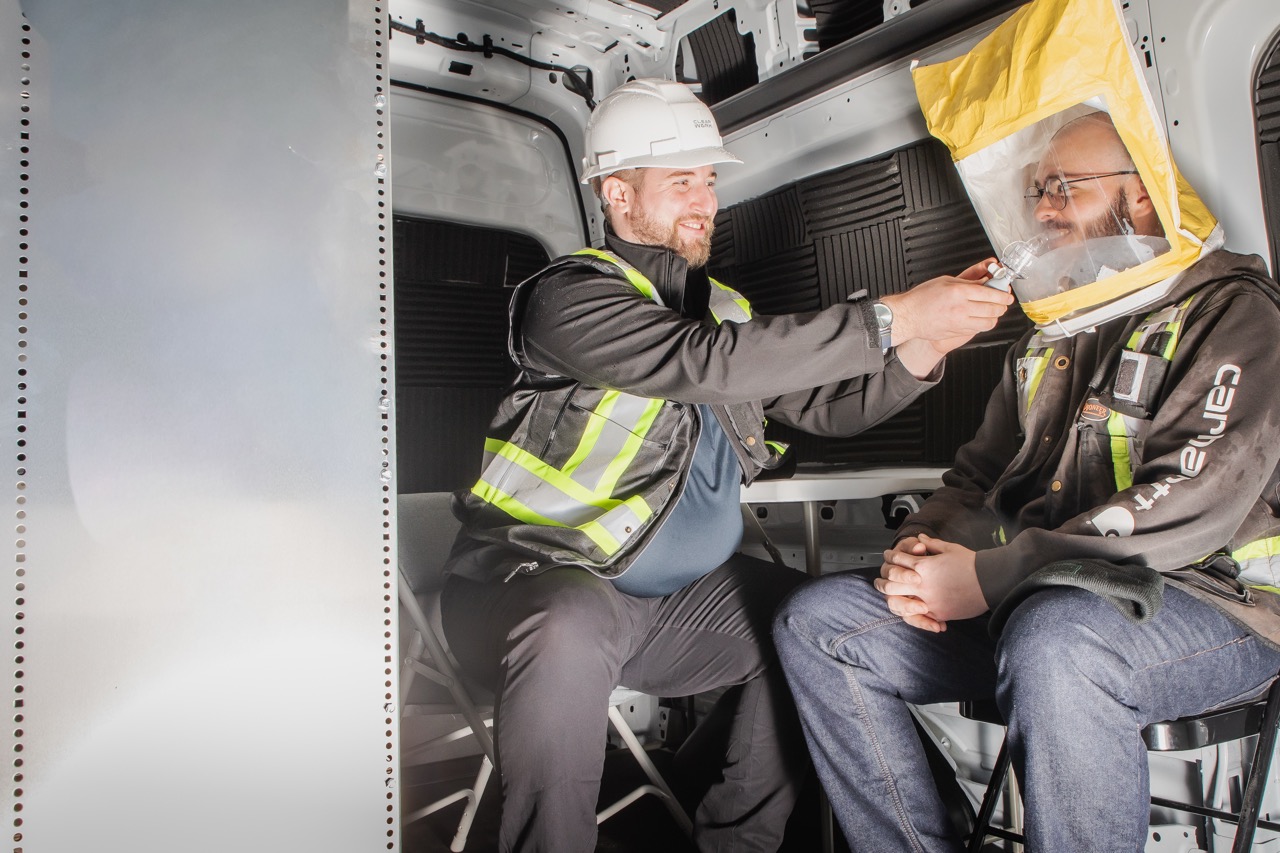
Clear Health Group is a WorkSafeBC-authorized Industrial Audiometric Business (IAB #436). We bring a mobile hearing testing unit to your site, test around 50 workers a day per technician, and put the records in your client portal. Construction employers in classification units starting with 72 can be tested under WorkSafeBC's Construction Industry Program.
Learn about our mobile hearing testing, book a noise survey or request a quote.
This guide is a summary for general information, not legal advice. Check Part 7 of the OHS Regulation for the exact wording.