Free Respiratory Protection Program Template for BC Employers
If your workers wear respirators to protect against air contaminants, section 8.5 of the WorkSafeBC OHS Regulation requires an effective protective equipment program, including written procedures for selecting, using, inspecting, cleaning, maintaining and storing respirators. Section 8.6 requires the program to be reviewed every year. It does not need to be long. It needs to say who is responsible, what the hazards are, which respirators are used and how fit testing, training and care are handled. This template gives you that structure.
How to use it: copy the text below into a document, replace everything in [square brackets] with your own details, and delete anything that does not apply. Keep it with your safety records and review it every year.
This is a starting point, not legal advice. Check the current WorkSafeBC OHS Regulation (Part 8) and CSA Z94.4 for the exact requirements that apply to your workplace.
1. Purpose and scope
[Company name] uses respirators to protect workers from airborne hazards where other controls do not reduce exposure enough. This program applies to all workers at [site name(s) / address(es)] who wear a respirator, including workers who choose to wear one when it is not required (optional use, section 8.43).
2. Responsibilities
- Program administrator: [Name, job title]. Responsible for running and reviewing this program.
- Supervisors: make sure workers wear the right respirator, do seal checks and keep equipment in good condition.
- Workers: wear only the respirator they were fit tested on, do a seal check every time, report damage and attend training.
3. Hazard assessment
- Airborne hazards: [e.g. silica dust, wood dust, welding fume, solvent vapour, wildfire smoke, infectious aerosols].
- Tasks and areas where respirators are required: [list].
- Assessment completed on [date] by [person]. Air sampling results, if any: [reference].
- Other controls in place first: [e.g. wet cutting, local exhaust ventilation, enclosures].
4. Respirator selection
| Task or area | Respirator type | Filter or cartridge |
|---|---|---|
| [Task] | [e.g. N95 / half-face / full-face / PAPR] | [e.g. P100, organic vapour] |
If the table does not display in your document, simply list each task with its respirator and filter type.
5. Fit testing (section 8.40)
- Every worker who wears a tight-fitting respirator is fit tested before first use and at least once a year after that.
- Workers are retested when they change to a different make, model or size, or when a change in their face could affect the fit (for example significant weight change or dental work).
- Fit tests follow CSA Z94.4. Qualitative testing is used for N95 and half-face respirators; quantitative testing is used for full-face respirators. Our provider: [company name].
- Workers must be clean-shaven where the respirator seals. Workers who cannot be clean-shaven for religious or medical reasons are offered [e.g. a loose-fitting PAPR].
6. Seal checks (section 8.41)
Workers do a positive and negative pressure seal check every time they put on a tight-fitting respirator. A respirator that does not pass a seal check is not used in the hazard area. See our seal check toolbox talk.
7. Training
Workers are trained when they start and at least [once a year] on: the hazards they are protected from, how to put on, seal check and remove their respirator, its limits, and how to inspect, clean and store it. Training is recorded with the date, topic and attendees.
8. Inspection, cleaning, storage and cartridge changes
- Reusable respirators are inspected before each use and cleaned after use following the manufacturer's instructions.
- Respirators are stored in a clean, sealed bag or container at: [location].
- Particulate filters are replaced when damaged, dirty or breathing becomes harder.
- Gas and vapour cartridges are changed on this schedule: [schedule, e.g. end of each shift or as per manufacturer's service life estimate].
See our respirator care toolbox talk.
9. Medical assessment (section 8.42)
Workers who have concerns about their ability to wear a respirator, such as breathing or heart conditions, report them to [name or role] and are referred for a medical opinion where needed.
10. Records (section 8.44)
We keep the hazard assessment, fit test results, training records and cartridge change records at: [location or system].
11. Annual review (section 8.6)
This program is reviewed every year by [name or role], with the joint health and safety committee or worker health and safety representative. Last reviewed: [date]. Next review due: [date].
Need help with any part of this?
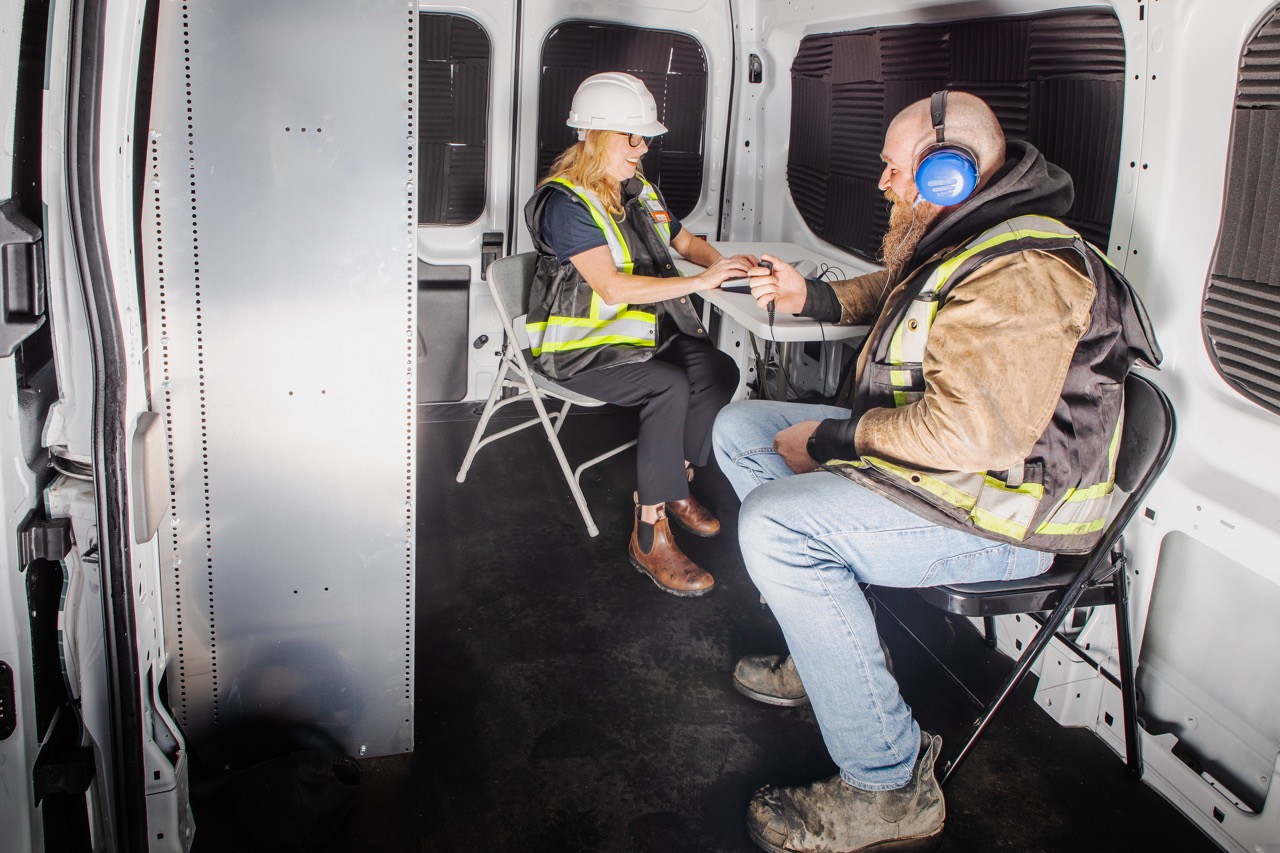
Clear Work brings on-site respirator fit testing to your workplace, with qualitative and quantitative testing to CSA Z94.4 and results stored in our client portal. Want to fit test in-house? We also offer fit tester training.
See also: WorkSafeBC fit testing requirements, beards and fit testing, the compliance calendar and our free toolbox talk library.