Beards and Respirator Fit Testing: What BC Employers Need to Know
Facial hair is the most common reason a respirator fit test fails, and the most common reason a testing day gets wasted. It is also the thing employers most often get wrong, because the rule is not what most people think it is.
The first part of this guide is general information. The last section explains what Clear Work provides.
The rule is about the seal line, not beards
There is no regulation that says workers cannot have facial hair. The requirement is narrower and more specific: nothing can come between the respirator and the skin where it seals.
That distinction matters, because it means plenty of facial hair is fine. A moustache that sits entirely inside the facepiece is not a problem. Neither is a soul patch below the seal, or hair on the chin of a worker whose respirator seals above it. What fails is hair that crosses the sealing surface — for a half-face respirator, that is a band running across the bridge of the nose, down the cheeks and under the chin.
So the practical question is never "does this worker have a beard?" It is "does hair cross the line where this particular respirator seals?" Two workers with similar beards and different respirators can get different answers.
Why even stubble matters
It is tempting to treat a day or two of growth as close enough. It is not. Hair in the sealing area holds the facepiece fractionally off the skin, and contaminated air follows the path of least resistance — through the gap rather than through the filter. A respirator that leaks at the seal offers far less protection than its rating suggests, and the worker has no way of knowing.
This is also why a fit test done on a stubbled face is worse than no test at all. It produces a pass on paper for a seal that will not hold.
Telling your crew before the day, not on it
This is the part that costs employers money.
A mobile fit testing visit is booked for a set number of people in a set window. If four workers arrive unshaven, those four cannot be tested, and the slots are gone. We can usually come back, but that is a second visit for four people rather than four tests inside a visit you have already paid for.
The fix is unglamorous: tell people well before the day, tell them more than once, and tell them specifically. "Be clean-shaven where the mask seals" lands better than "no beards," because a worker with a moustache who hears "no beards" either shaves something he did not need to or decides the message does not apply to him.
It also helps to say why. A crew that understands the mask does not work with hair under the seal turns up ready. A crew that thinks it is a grooming policy does not.
Workers who cannot or will not shave
Some workers will not be clean-shaven, and in several of those cases the employer has a duty to accommodate rather than a problem to enforce.
Religious observance. For some Sikh and Muslim workers, among others, maintaining facial hair is a religious obligation. Under the BC Human Rights Code an employer has a duty to accommodate religious practice up to the point of undue hardship. "Shave or leave" is not a position that holds.
Medical reasons. Pseudofolliculitis barbae — persistent, painful ingrown hairs from shaving — makes regular shaving genuinely harmful for some workers, and it affects Black workers disproportionately. That is a medical condition, not a preference.
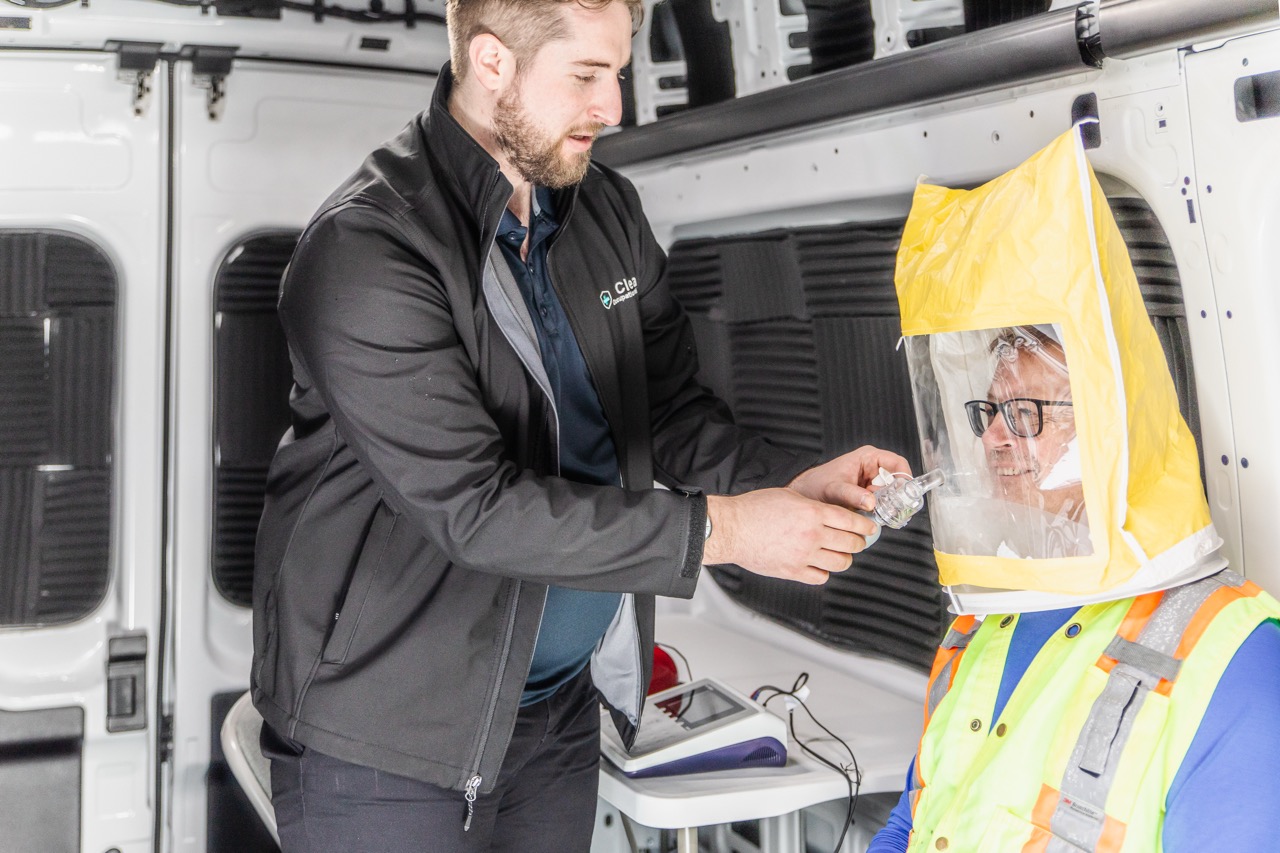
The usual answer in both cases is the same, and it is a good one: a loose-fitting powered air-purifying respirator, the hood or helmet style, does not seal against the face. Because there is no face seal, there is no fit test to pass, and facial hair is not a barrier. It is a more expensive piece of equipment than a disposable mask, but it keeps a skilled worker on the job and it protects them properly.
Worth knowing: this only applies to the loose-fitting style. A tight-fitting PAPR facepiece still seals against the skin and still needs both a clean seal area and a fit test.
Reassignment away from respirator work is the other option, but it should be the last one, not the first.
What to put in writing
If respirators are part of your operation, your respiratory protection program should say plainly:
- Which roles require a tight-fitting respirator
- That workers in those roles must be clean-shaven where the respirator seals
- How far in advance people are told before a fit testing visit
- How a worker raises a religious or medical reason, and who handles it
- What alternative equipment is available when they do
Having that written down before someone raises an objection is considerably easier than working it out in the moment, on a testing day, in front of their crew.
What Clear Work provides
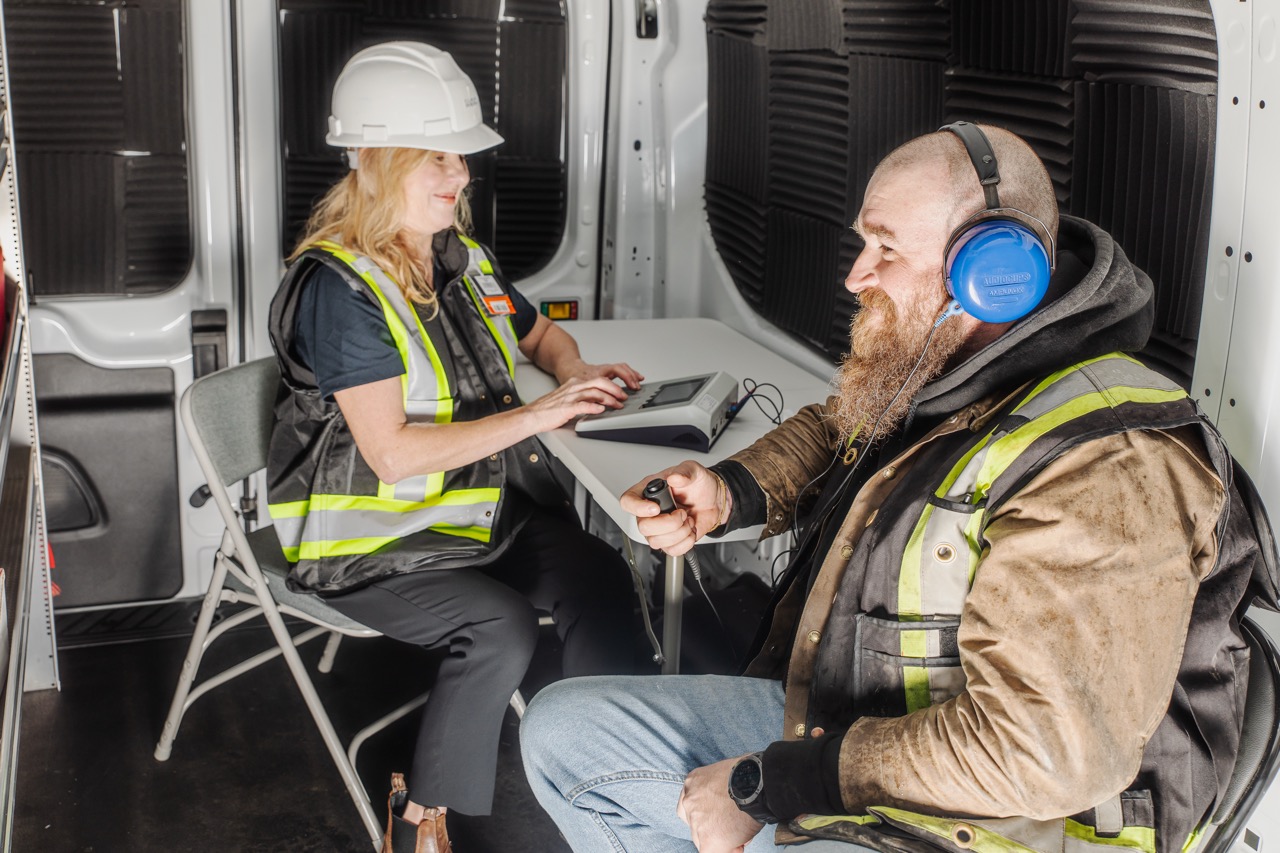
We bring respirator fit testing to your worksite across British Columbia. Qualitative fit testing for N95 and suitable half-face respirators, from 5 people per visit, and quantitative fit testing — which covers full-face respirators and tight-fitting PAPR facepieces — for larger groups.
We send pre-visit instructions before every booking, written so your crew knows exactly what clean-shaven means and why, which is the cheapest way we know to stop a testing day being half wasted.
Read about our on-site fit testing, the difference between qualitative and quantitative fit testing, or what WorkSafeBC requires. Or request a quote and tell us your crew size.
This guide is general information, not legal or medical advice. Accommodation obligations depend on the circumstances — take advice on your own situation, and check the current OHS Regulation and CSA Z94.4 for the exact requirements.