Toolbox Talk: Respirator Care, Storage and Cartridge Changes
A 5-minute toolbox talk for BC supervisors and crew leads. Read it out, or use the key points as prompts. Free to print and use.
Why this matters
A reusable respirator is only as good as its condition. A cracked valve, a stretched strap or a spent cartridge can let contaminated air straight in, and the wearer usually cannot tell. Five minutes of care at the end of a shift keeps the mask doing its job.
Key points to cover
- Inspect before use: check the facepiece for cracks, tears or stiffness. Check the straps still stretch and the buckles hold. Look at the inhalation and exhalation valves: they should be clean, flat and not curled or torn.
- Clean after use: remove the cartridges, then wash the facepiece in warm water with a mild soap or the cleaner the manufacturer recommends. Rinse and let it air dry. Do not use solvents, which damage the rubber.
- Store it properly: keep it in a clean, sealed bag or container, out of sunlight, heat, dust and chemicals. Do not hang it on a nail or leave it on the dash, which bends it out of shape.
- Particulate filters: change them when breathing gets harder, when they are damaged or dirty, or as your program says.
- Gas and vapour cartridges: follow your written change schedule. Do not wait until you smell or taste the chemical, because by then you are already breathing it in.
- Your mask, not the crew's: respirators are personal. Do not swap or borrow, since a different model or size may not fit you.
- Report damage: if anything is worn out, get it replaced before your next shift.
Quick demo
Take a used respirator apart in front of the crew. Show the valves, how to pull and refit the cartridges, and what a worn strap or curled valve looks like. Then put it back together and do a seal check.
Questions to ask your crew
- Where do you keep your respirator between shifts?
- When were your cartridges last changed?
- Does anyone's mask have parts that look worn or damaged?
Record it
Write down the date, the topic and who attended, and keep it with your respiratory protection program records.
Where Clear Work fits
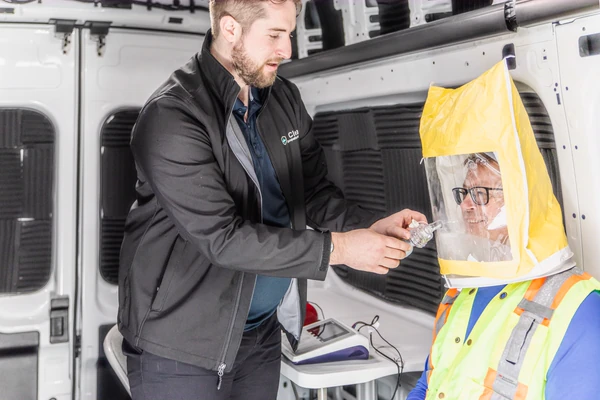
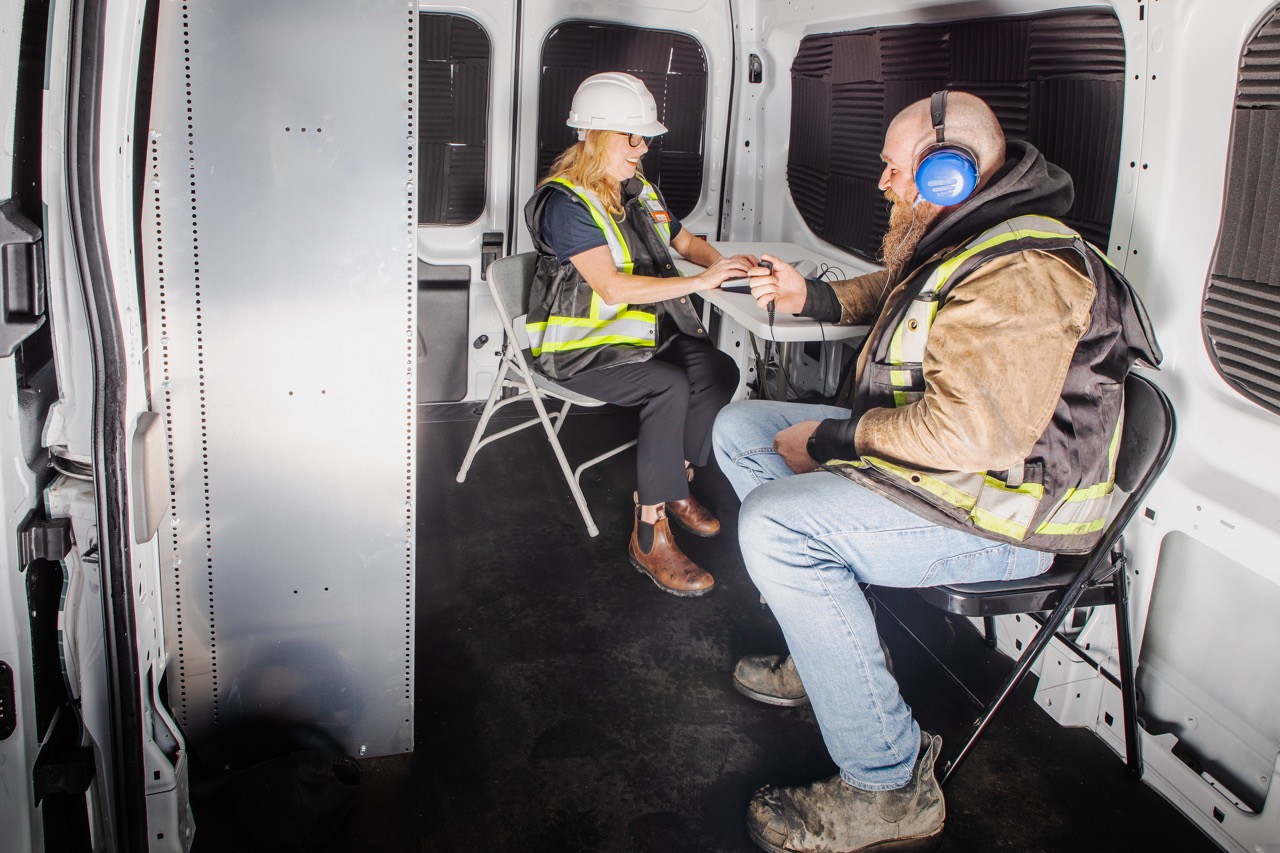
Care and storage keep a respirator working. A fit test confirms it fits. We bring on-site respirator fit testing to BC worksites, with qualitative testing for N95s and half-face respirators and quantitative testing for full-face masks.
Read more: qualitative vs quantitative fit testing, or the companion talk on seal checks before every use. More talks in our free toolbox talk library.
This toolbox talk is general safety information. Always follow the respirator manufacturer's instructions, your respiratory protection program and the current WorkSafeBC OHS Regulation.