The CIP 11-Month Rule for Construction Hearing Tests
Reviewed by Shruti, M.Sc., R-Aud, HIP-BC. Last reviewed October 23, 2026. Based on the WorkSafeBC OHS Regulation, Part 7 (Noise) and the WorkSafeBC Hearing Test Submission System User Guide.
WorkSafeBC's Construction Industry Program won't cover a hearing test done less than 11 months after the worker's previous test. For construction crews, that means each covered retest has to land after 11 months and a day, and no later than the 12 months WorkSafeBC allows between tests.
That leaves a window of about one month. Book a retest inside it and the program pays; book it early and it doesn't.
How the Construction Industry Program Works
Every construction employer in a WorkSafeBC classification unit starting with 72 pays into the Construction Industry Program (CIP). The program is a fund that pays for hearing tests for construction workers, so the employer doesn't pay directly when workers are tested, as long as the hearing tester is part of the program (WorkSafeBC: annual hearing testing).
The fund has one timing limit. WorkSafeBC tells hearing testers they are only paid for a test if the worker's previous test, by any authorized hearing test business, was done more than 11 months earlier: "at least 11 months + 1 day". A test done 11 months after the last one, or sooner, is not paid.
How It Fits With the 12-Month Rule
Section 7.8 of the OHS Regulation sets the other side of the window. Workers exposed to noise above the limits (85 dBA Lex or a 140 dBC peak) need:
- a first hearing test as soon as practicable after starting work, and no later than 6 months after their start date, then
- a test at least once every 12 months after that.
Put the two rules together and a construction worker's retest has three possible outcomes:
- 11 months or less after the last test: on time for section 7.8, but the CIP won't cover it.
- After 11 months and a day, up to 12 months: covered by the CIP and on time.
- More than 12 months: late under section 7.8.
The 11-month rule is a payment rule for the program. It isn't part of section 7.8, which only sets the maximum gap between tests.
Where Crews Get Caught Out
Most early tests aren't deliberate. They come from ordinary scheduling changes.
- Moving testing day earlier. A crew tested in late October and rebooked for late September the next year is a month too early for the program, even though it's well within 12 months.
- Workers tested somewhere else. The rule counts a worker's previous test by any authorized tester, not just yours. A worker who moved from another construction employer may have been tested there recently.
- Make-up days and second sites. A worker tested at one site can turn up again at another site visit or a make-up day a few months later.
- Two testers in one year. Switching hearing test providers mid-year can put a second test inside the window if nobody checks the dates.
How to Keep Every Test Inside the Window
- Keep each worker's last test date. WorkSafeBC makes your workers' hearing test reports available in your online services account, so the dates are already on record.
- Book retests for the same month or later, never earlier. If you need to move testing day, move it later, while staying inside 12 months.
- Ask new hires when they were last tested. Their 6-month deadline still applies at your company; see the new-hire 6-month rule.
- Keep one record for the whole crew. Clear Work clients see who is current, who is due and who needs follow-up in the client portal, with results within 48 hours of testing.
- Check whether your crew is covered. Our construction hearing test check takes about 30 seconds.
Existing Clear Work clients can book an annual retest and tell us the month that suits their crew.
How Clear Work Tests Construction Crews
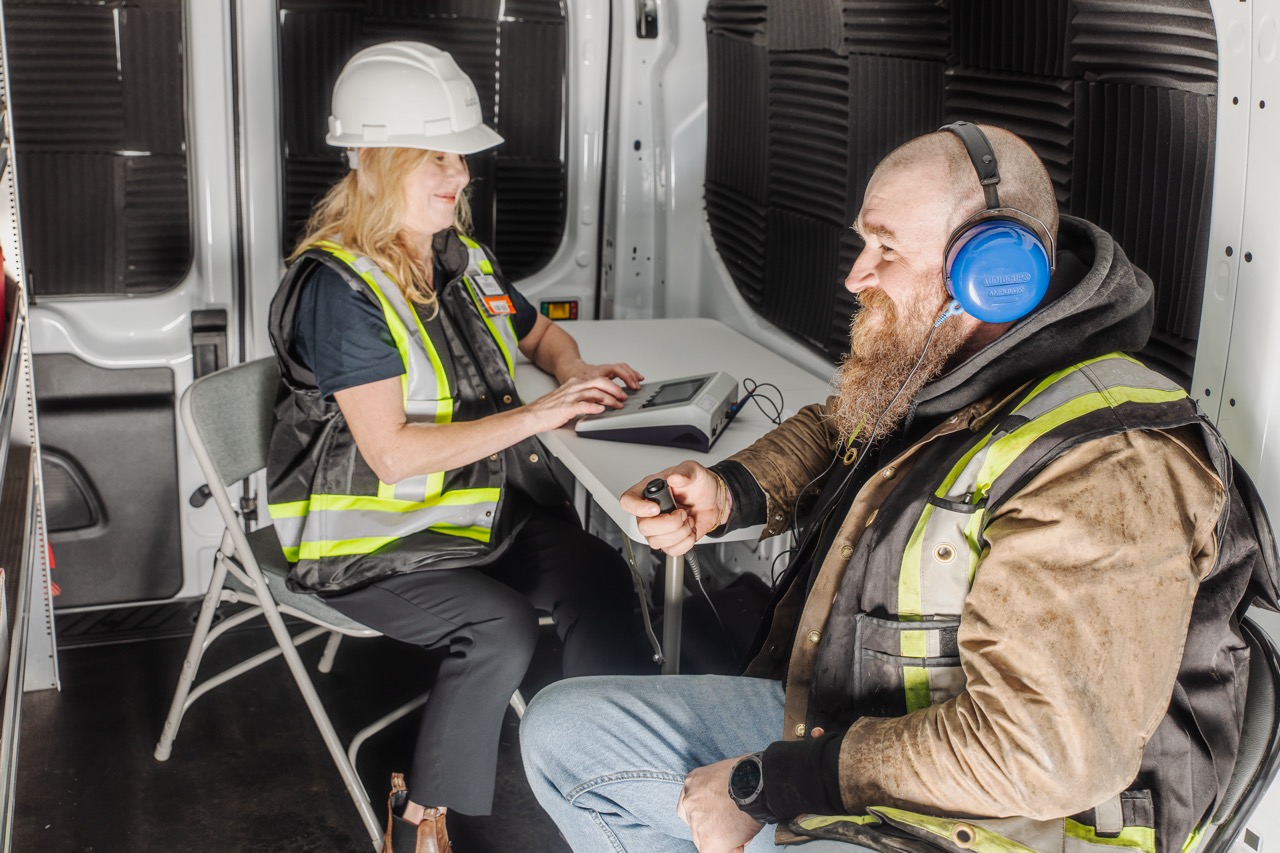
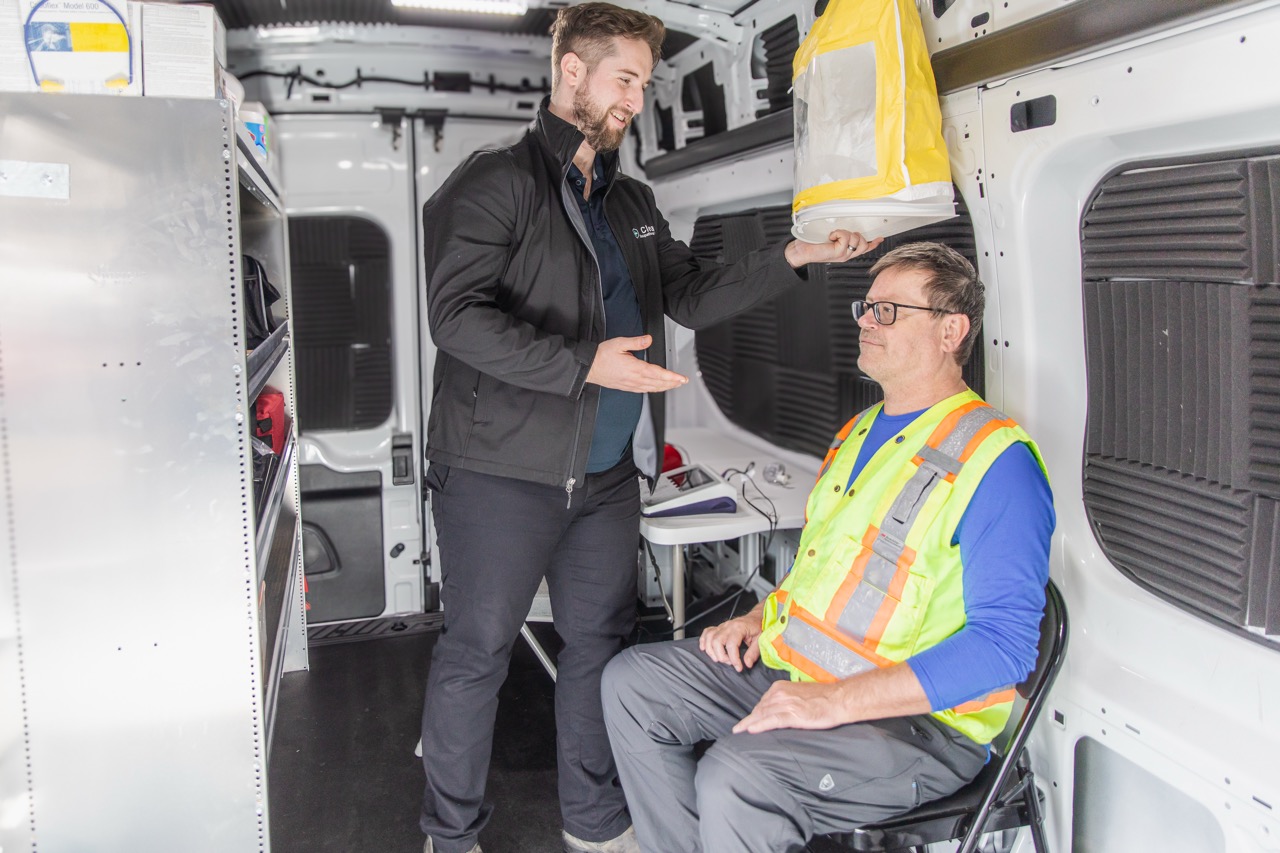
Clear Work is registered with WorkSafeBC's Construction Industry Program and is a WorkSafeBC-authorized industrial audiometric business (IAB #436). WorkSafeBC-certified industrial audiometric technicians test your workers in one of our mobile units, parked at your site.
Each unit has 2 booths and tests 6–8 workers an hour, 50+ a day, on all shifts, including nights and weekends. For example, we tested 40 workers for Peak Construction Group in Vancouver, and the employer paid nothing for covered workers.
Read more about mobile hearing testing and hearing testing for construction, or see hearing testing in Surrey and hearing testing in Vancouver.
Testing workers outside the program too? Get an instant quote.
Frequently Asked Questions
What is the 11-month rule for construction hearing tests?
WorkSafeBC's Construction Industry Program won't cover a hearing test done less than 11 months after the worker's previous test. WorkSafeBC only pays testers when the previous test was more than 11 months earlier (at least 11 months and a day).
Does an early test still meet WorkSafeBC's hearing test requirement?
Section 7.8 requires a test at least once every 12 months, so it only sets the maximum gap. The 11-month rule is about whether the Construction Industry Program pays for the test.
Does a test from another hearing test company count?
Yes. The rule looks at the worker's previous test by any authorized hearing test business, so check when new workers were last tested.
Which employers are covered by the Construction Industry Program?
Construction employers in WorkSafeBC classification units starting with 72. They pay into the program and don't pay directly for tests, as long as the tester is part of the program; Clear Work is registered with it.
When should we book next year's retest?
After 11 months and a day, and no later than 12 months after the last test. Booking the same month each year, or a little later, keeps you inside that window.
This guide is a summary for general information, not legal advice. Check Part 7 of the OHS Regulation for the exact wording.