How to Work Out Your BC First Aid Requirements (Basic, Intermediate and Advanced)
On November 1, 2024, WorkSafeBC updated the occupational first aid requirements. The certificate names changed, and every employer now has more to document. Here is how to work out what your workplace needs.
The new certificate names
Occupational First Aid Levels 1, 2 and 3 became Basic, Intermediate and Advanced, in line with CSA standards. First aid kits were renamed the same way. If your attendants hold older certificates, check their expiry dates and plan renewals now.
The three things that set your requirements
WorkSafeBC bases your first aid attendant and kit requirements on:
- Number of workers. Count the maximum on shift, including full-time and part-time staff, managers, supervisors, and shift or transient workers.
- Your hazard rating. This is low, moderate or high, and it comes from WorkSafeBC, not your own judgment. You will find it on the assessment rate letter WorkSafeBC sends you every year.
- Travel time to medical care. A workplace counts as remote if an ambulance cannot reach it within 30 minutes under normal conditions, and as less accessible if ambulance attendants cannot safely reach the work area. Remote and less accessible workplaces need more.
Use these three factors with the tables in Schedule 3-A of the Regulation, or WorkSafeBC's online tool, to find the number and level of attendants and the kits you need.
What you now have to document
- A written first aid assessment for every workplace. It must consider your workers, hazards, likely injuries and any barriers to first aid.
- A review every 12 months, or sooner if something changes that could affect your first aid needs.
- Your joint health and safety committee or worker representative must be involved in the assessment, where you have one.
- First aid drills every year, and whenever your procedures change substantially.
Keeping attendants certified without closing for the day
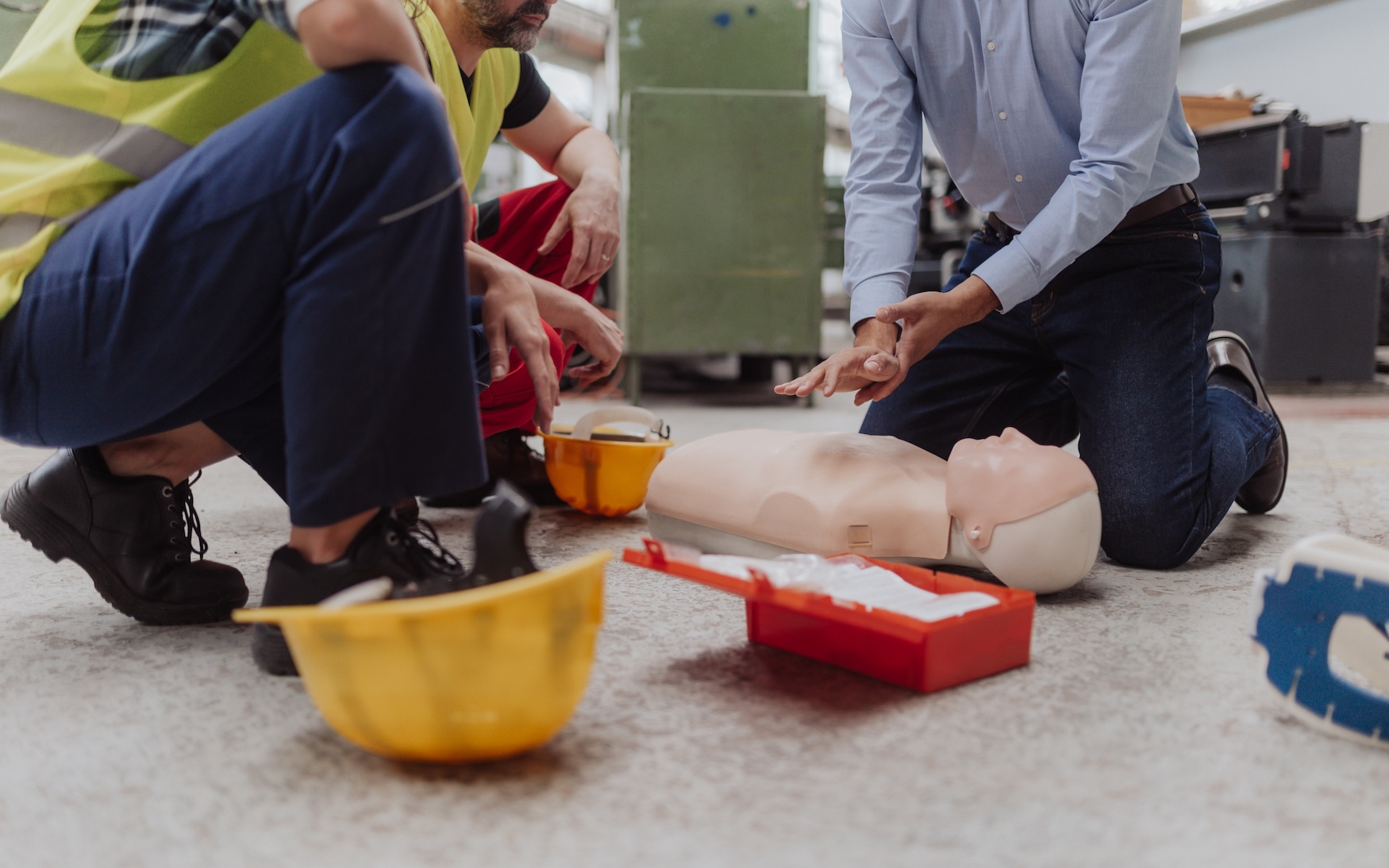
Sending staff to a training centre means losing them for one day for Basic or two days for Intermediate, plus travel. Clear Health Group delivers Basic and Intermediate first aid training at your workplace for groups of 5 or more, scheduled around your shifts.
See how it works: Avalon Gardens trained 12 staff in Intermediate First Aid with one on-site practical day, and Waste Connections certified 10 employees without pulling crews off their routes.
Wondering about liability? Read Can You Be Sued for Giving First Aid in BC?
Learn about our on-site first aid training or request a quote.
This guide is a summary for general information, not legal advice. Check WorkSafeBC's first aid assessment guidance and Part 3 of the OHS Regulation for the exact requirements.