The Employer's Obligations, in the Order You Need Them
Hearing testing obligations for BC workplaces sit in Part 7, Division 1 of the Occupational Health and Safety Regulation — sections 7.1 through 7.9. What follows is a plain-language summary for employers, with the operative figures and phrases quoted from the regulation itself. Where we describe our own service, we say so.
1. What counts as too loud
Section 7.2 sets two exposure limits, and an employer must ensure workers are not exposed above either one: an 85 dBA Lex daily noise exposure level, and a 140 dBC peak sound level. The first is an average across the working day. The second is a single loud event — an impact, a bang — measured at its peak.
The number that catches employers out is a different one. You do not wait until you are over the limit before acting. Under section 7.3(1), the duty to measure noise exposure starts if a worker is or may be exposed to potentially harmful levels of noise, or if information indicates a worker may be exposed to a level exceeding 82 dBA Lex. Eighty-two, not eighty-five: the duty to measure begins below the exposure limit.
2. Who has to be tested
Section 7.8(1) applies to workers who are exposed to noise that exceeds the noise exposure limits. Not everyone on site — the workers whose exposure is over the section 7.2 limits. Which is why measurement comes first. Until you have measured, you do not know who this applies to.
3. How often
Section 7.8(1) sets two separate requirements: an initial hearing test as soon as practicable after employment starts, and in any case not later than 6 months after the start of employment; then a test at least once every 12 months after the initial test.
So a new hire carries a deadline of their own — six months from their start date — and it is easy to miss when someone joins between annual testing days.
4. Who is allowed to do the testing
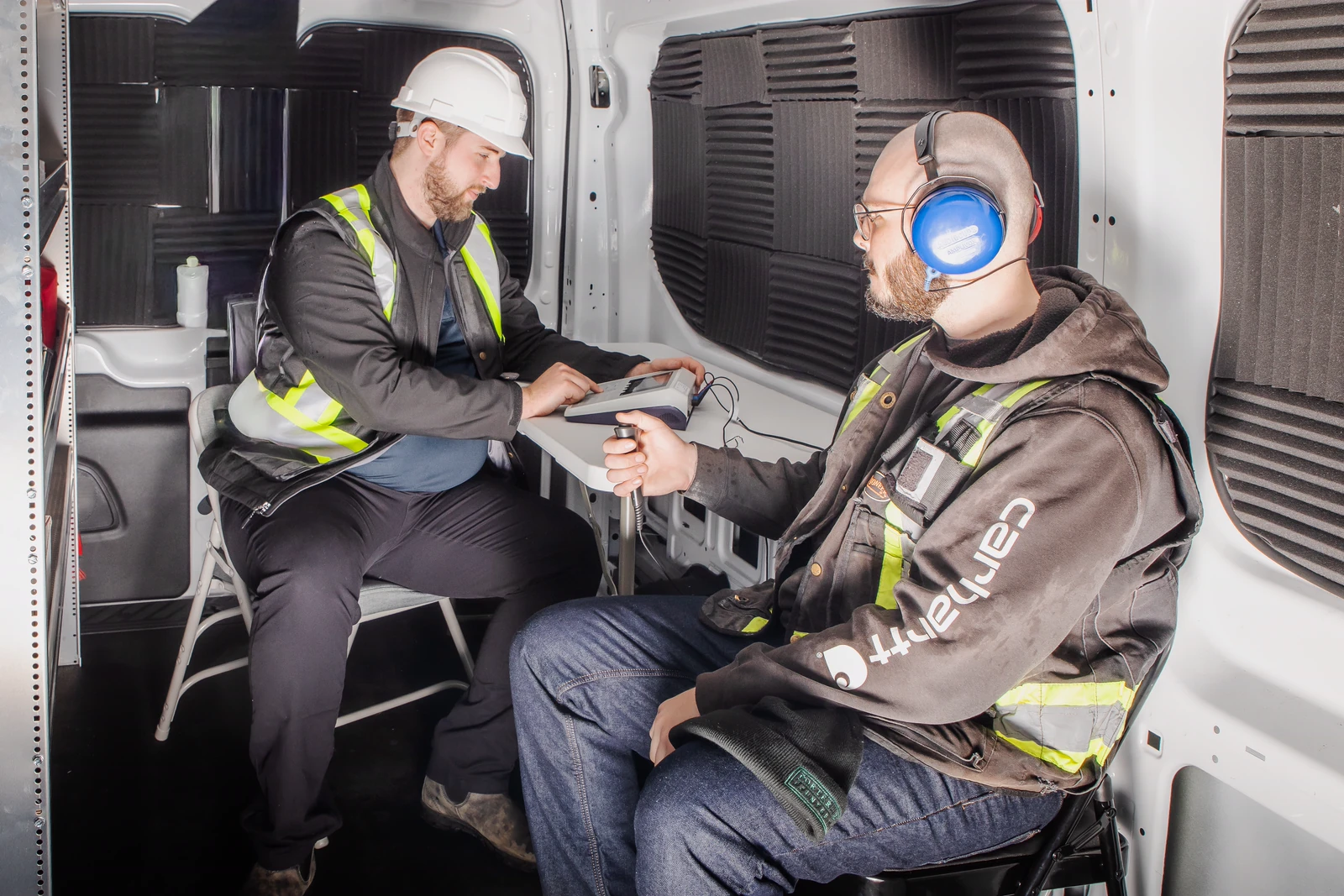
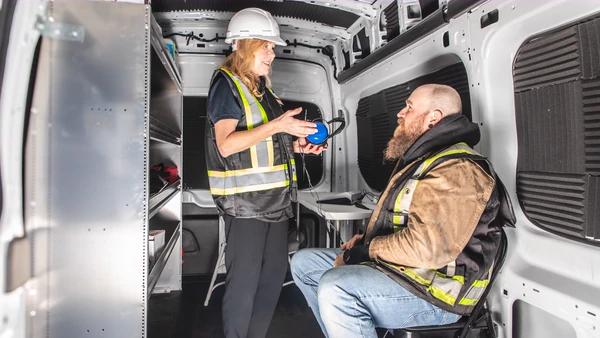
This is the part most often described loosely. Section 7.8(2) requires that hearing tests be administered by "a hearing tester authorized by the Board." "The Board" is the Workers' Compensation Board, which operates as WorkSafeBC. The regulation itself says nothing further about the tester's qualifications — that sits in WorkSafeBC's certification programme rather than in the regulation.
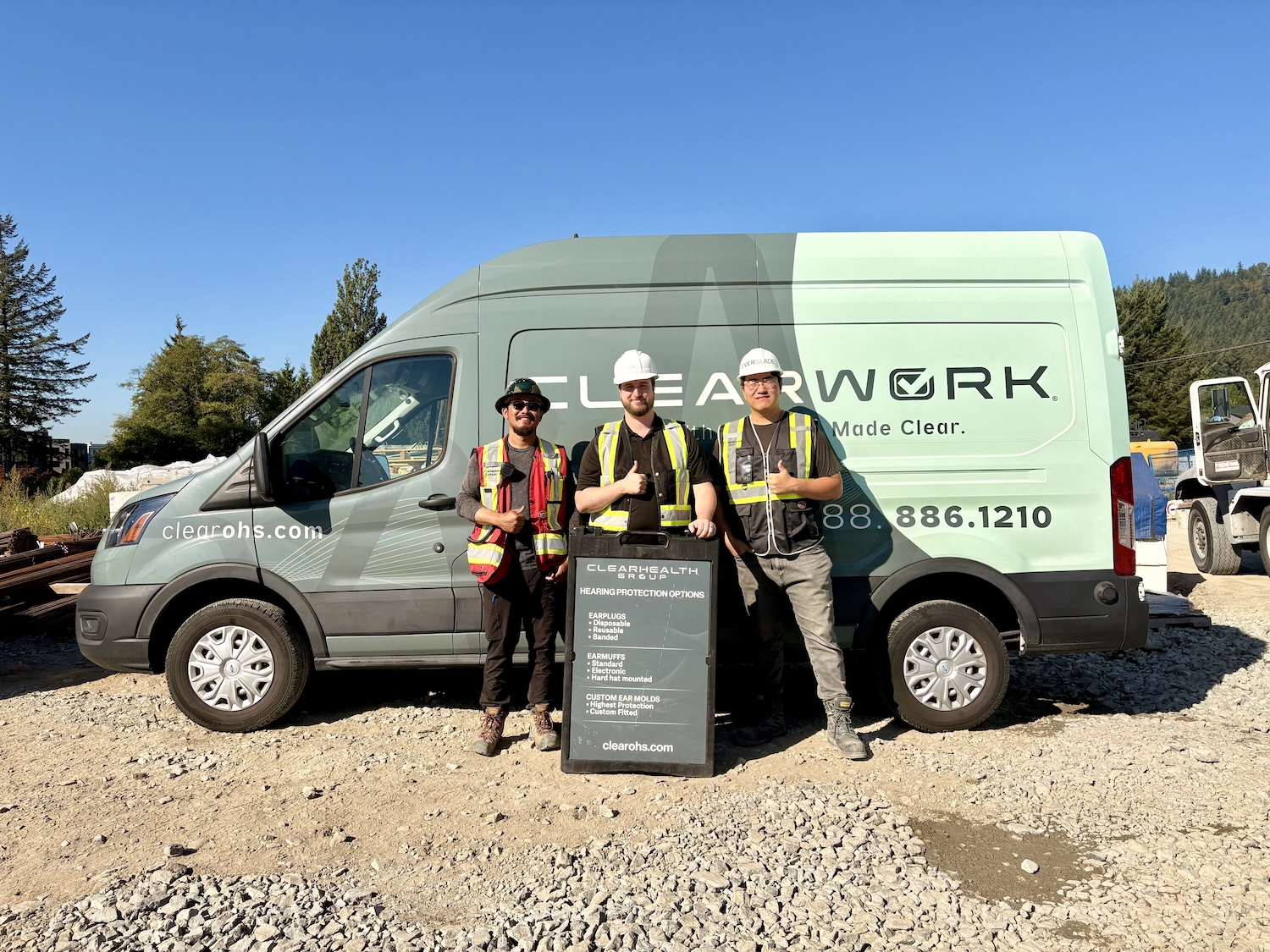
Where we fit. Clear Work is a WorkSafeBC-authorized Industrial Audiometric Business, IAB #436, and our technicians hold the Industrial Audiometric Technician qualification. We bring mobile hearing testing to worksites across British Columbia. We also test for WorkSafeBC's Construction Industry Program, so construction companies in classification units starting with 72 don't pay directly for each worker tested.