Workstation Ergonomic Assessments for Offices

Desk work produces real musculoskeletal injury, and the duty to identify and assess MSI risk does not stop at the office door. We assess workstations and the way people actually use them.

Assessments are carried out by a Canadian Certified Professional Ergonomist (CCPE), across the Lower Mainland and Fraser Valley.

Minimum 5 people per visit. Our on-site services are booked for groups of 5 or more; we do not offer single-person visits.

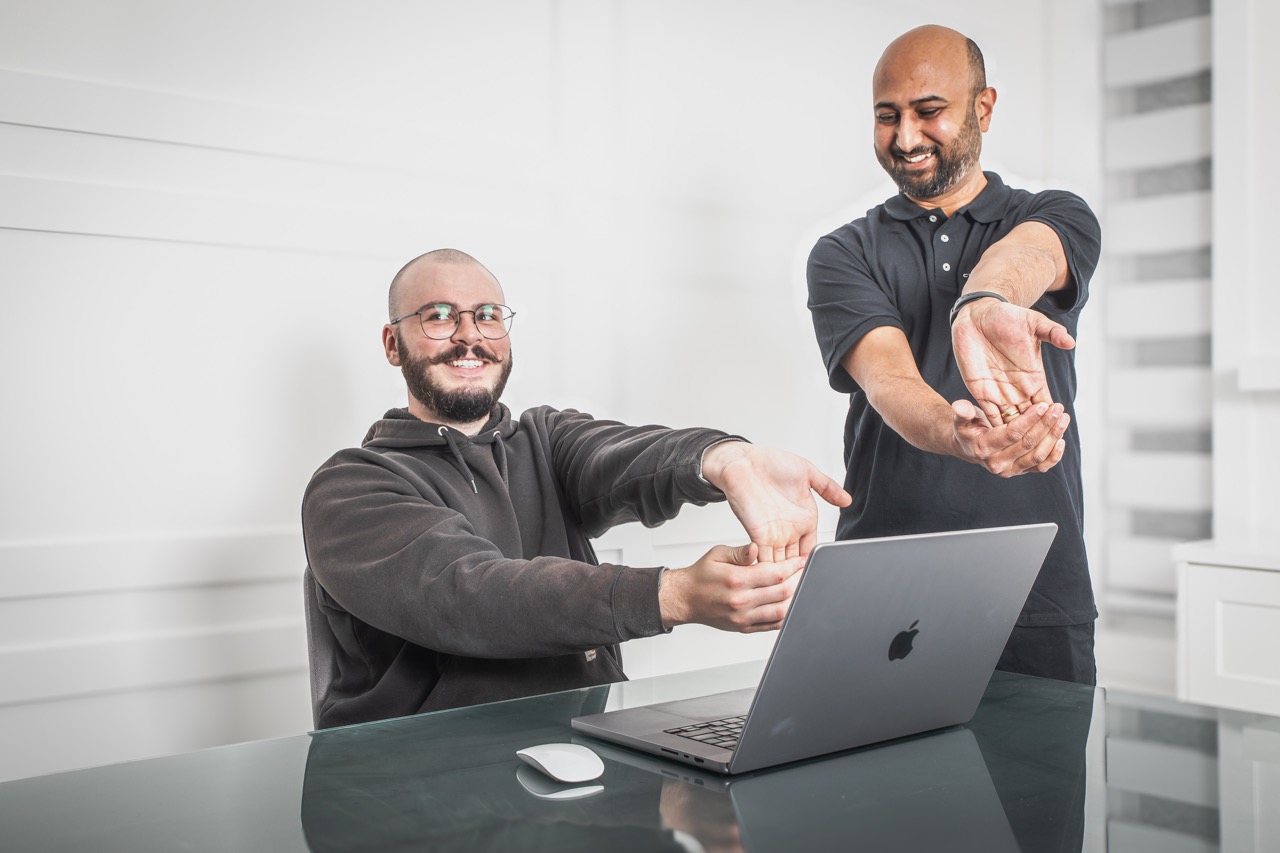
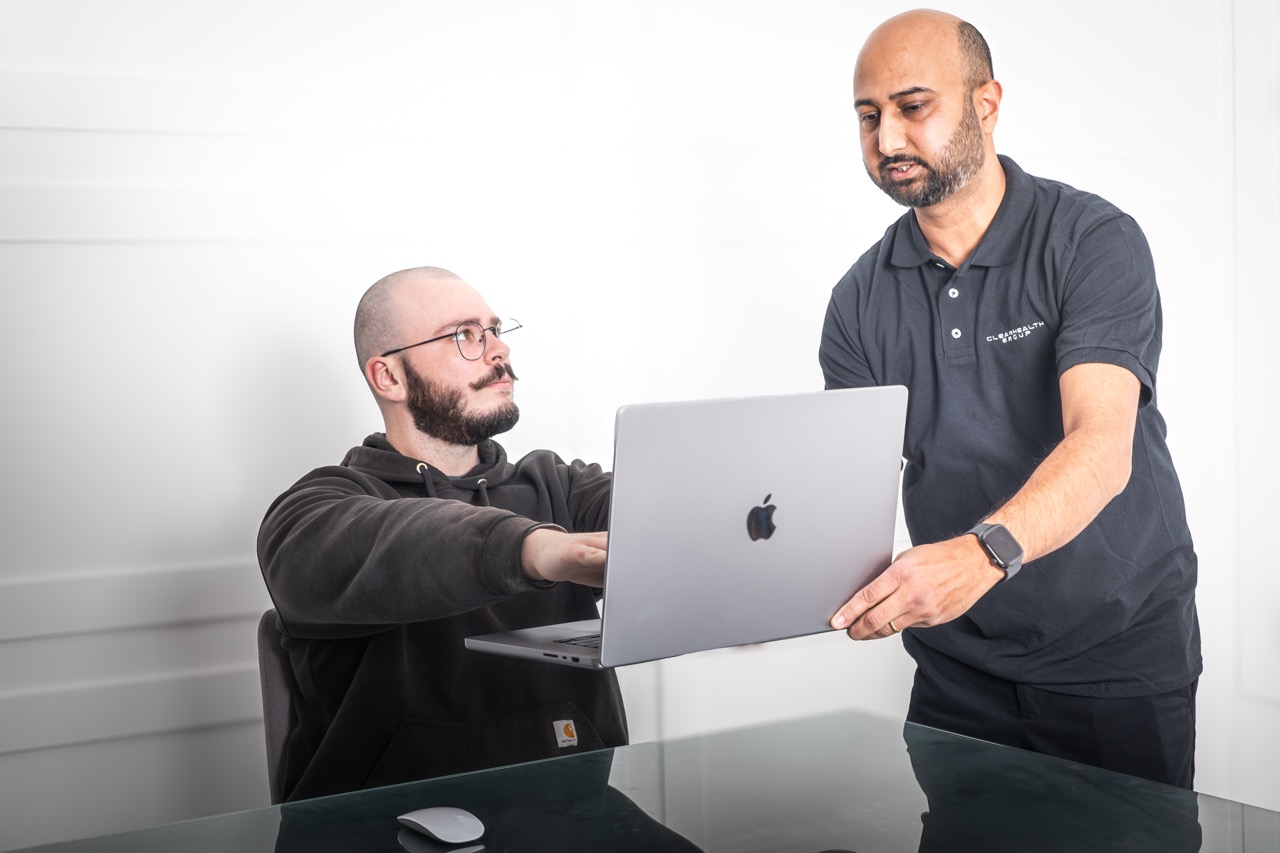
Ergonomic assessor reviewing a worker's screen and desk setup with them
Registered Nurses
Certified Industrial Audiometric Technicians
Occupational Health Compliance Programs
Fully Licensed & Insured
BBB Accredited
100+ BC Employers Served
Why MSI Assessment Matters

Office MSI Risk Is Quiet, Not Absent

Office exposure comes from sustained posture and low task variability rather than force, which is precisely why it gets overlooked until someone is off work. The factors section 4.49 requires you to consider show up here as:

  • Sustained seated postures with little movement
  • Display height, viewing distance and working reaches
  • Keyboard and mouse repetition
  • Laptop use without a dock, riser or external keyboard
  • Hot-desking and shared stations set up for someone else
  • Low task variability across long stretches of the day

Musculoskeletal injury is among the most common and costly claim types in BC, and the obligations sit in the OHS Regulation, Part 4. They are duties, not recommendations:

  1. 4.47 — Identify. The employer must identify factors in the workplace that may expose workers to a risk of musculoskeletal injury. This one has no trigger. It applies whether or not anyone has been hurt yet.
  2. 4.48 — Assess. Once those factors have been identified, the employer must ensure the risk to workers is assessed.
  3. 4.49 — What has to be considered. The regulation sets out the factors that must be considered, where applicable, during identification and assessment: the physical demands of the work (force, repetition, duration, posture, local contact stress); the layout and condition of the workplace (reaches, heights, seating, floor surfaces); the characteristics of objects handled (size and shape, load and weight distribution, handles); environmental conditions including cold; and the organization of the work (work-recovery cycles, task variability, work rate). This is the checklist an assessment actually has to cover.
  4. 4.50(1) — Control. The employer must eliminate the risk, or where that is not practicable, minimize it. Personal protective equipment comes last, only where engineering and administrative controls are not practicable, and interim controls must go in without undue delay.
  5. 4.51 — Educate and train. Workers who may be exposed must be educated in risk identification, and those assigned to work requiring specific measures must be trained in using them.
  6. 4.52 — Monitor and review. The employer must monitor whether the measures taken are working, and ensure those measures are reviewed at least annually. Where monitoring finds deficiencies they must be corrected without undue delay.
  7. 4.53 — Consult. You must consult your joint committee, or your worker health and safety representative, on risk identification, assessment and control, on the content and provision of worker education and training, and on evaluating the measures taken. Separately, when a risk assessment is being performed, you must consult workers with signs or symptoms of MSI and a representative sample of the workers who do the work being assessed.

Worth being precise about one thing: nothing in sections 4.46 to 4.53 requires a written report. The reason to have one is evidentiary rather than regulatory. An identification and assessment you cannot produce is hard to demonstrate to your joint committee or to an officer, and there is nothing for next year's review to measure against.
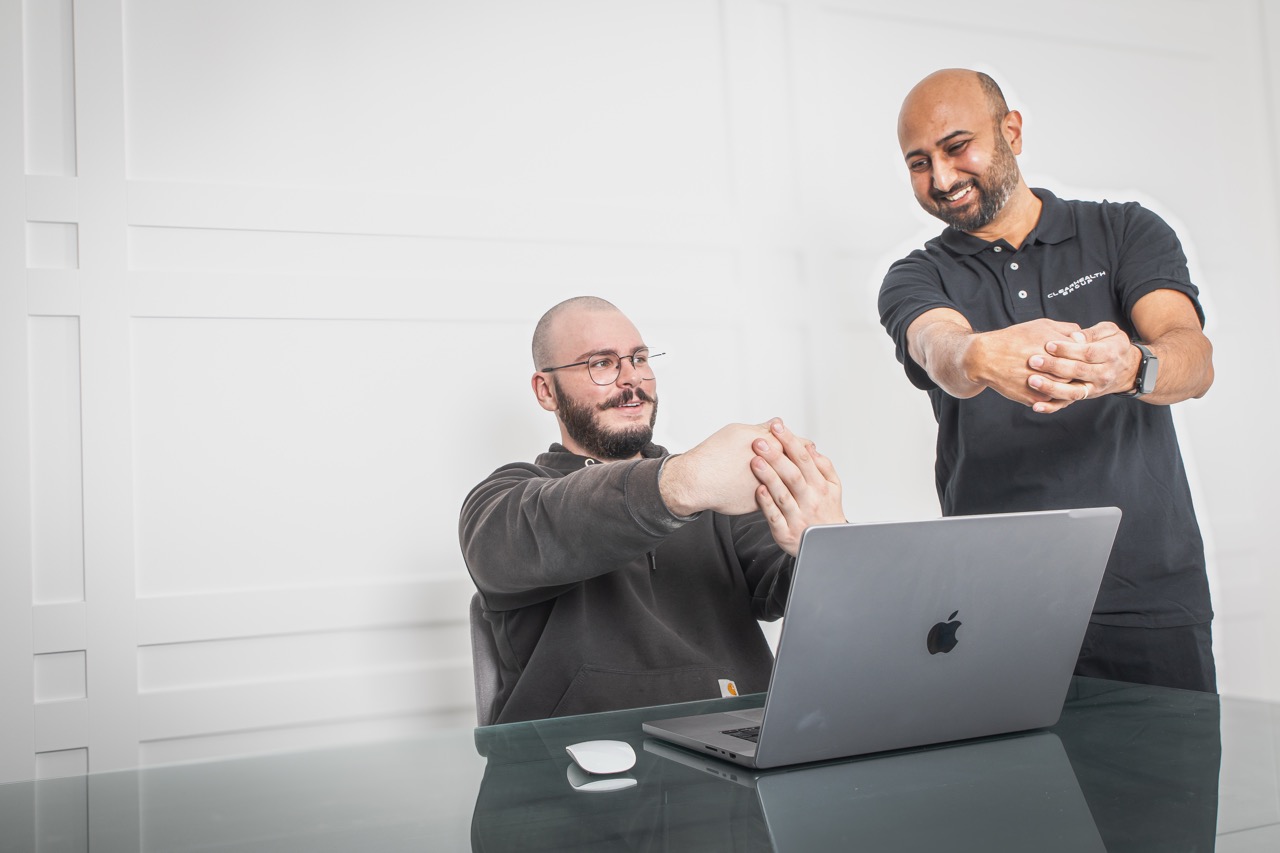
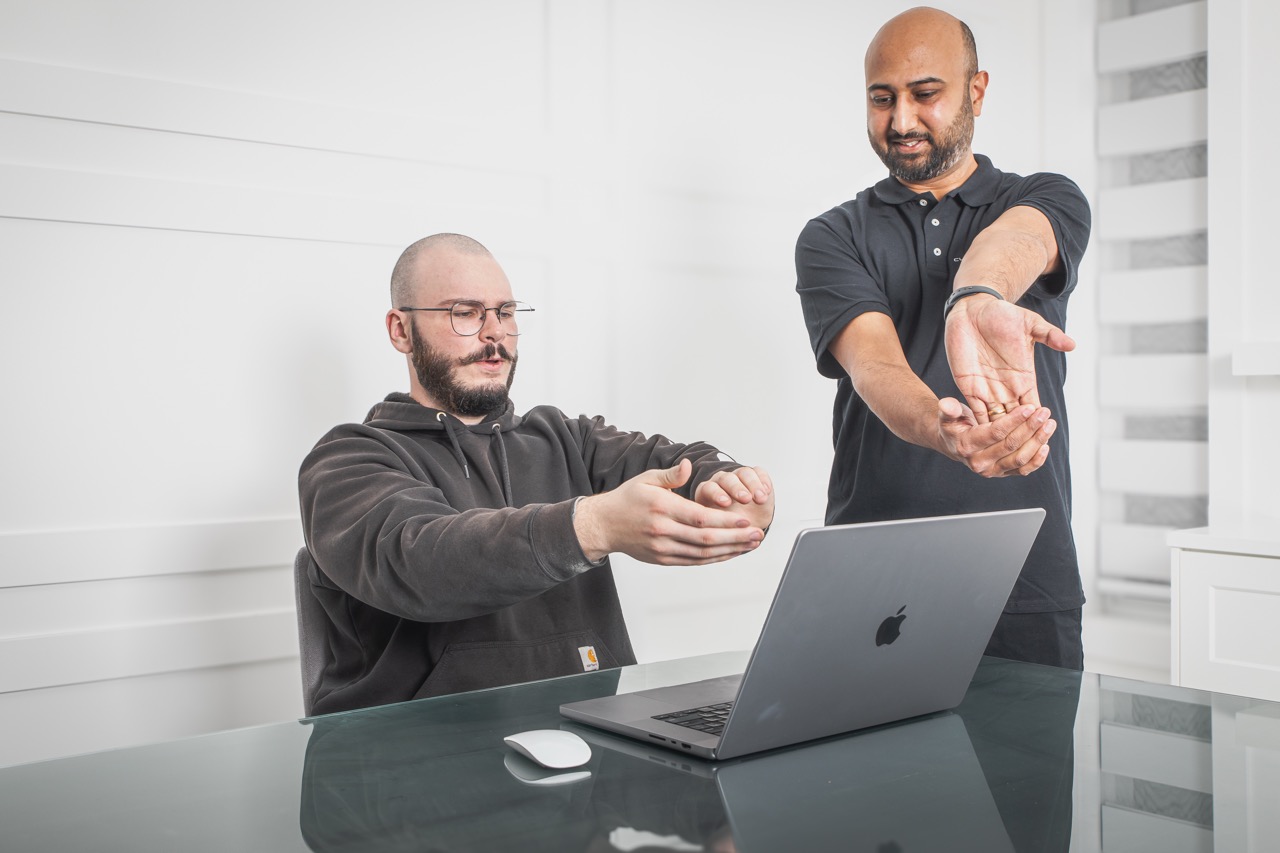
Ergonomic assessor showing a seated worker a hand and finger stretch at their desk
What's Included

What an Assessment Covers

We work through identification and assessment on your site, and give you a written record you can put in front of your joint committee or a WorkSafeBC officer.

Risk Identification (4.47)

  • Observation of tasks as they are actually performed
  • Repetitive, forceful and sustained awkward postures
  • Manual handling, lifting and load demands
  • Workstation, tool and layout factors

Risk Assessment (4.48)

  • Assessment of the identified factors against the section 4.49 list
  • Office workstations and industrial task-based work both covered
  • Findings tied to the specific jobs and areas they came from
  • Priorities, so you know what to deal with first

Documentation You Can File

  • Written report covering identification and assessment
  • Practical control recommendations your supervisors can act on
  • A record to support the consultation required under 4.53
  • A baseline for the annual review required under 4.52(1)
Why Partner With Us

Why BC Employers Bring Us In

We deliver occupational health services on site across the Lower Mainland and Fraser Valley, so an office assessment can be scheduled alongside other work. Ergonomic assessment is part of the wider workplace ergonomic assessment service we run across the region.

The Setup and the Habit

A correctly specified chair used incorrectly is still a risk factor. We assess the equipment and how the person actually works at it, and the recommendations reflect both.

Whole Floor, or the Roles That Matter

We work through a floor systematically, or concentrate on the roles and workstations where complaints and accommodation requests cluster. Each workstation takes roughly 30 to 45 minutes, so a single visit covers a dozen or more.

Worker and ergonomic assessor going through stretches at the workstation
5.0
*
Average Rating
100
+
BC Employers, All Services
4.47
Where The MSI Duty Starts
Where We Work

Provincial Coverage. Local Service.

Clear Health Group delivers mobile occupational health and RN-led home services across British Columbia - including the Lower Mainland, Fraser Valley, Vancouver Island, and the BC Interior. Our team travels directly to worksites and homes, eliminating the need for clinic visits.

Currently serving major BC municipalities including:

What Employers Across BC Say About Us

Clear Health Group supports employers with reliable, structured mobile health services designed to simplify compliance and reduce operational disruption. Families trust our RN-led team for professional in-home care delivered with consistency and clinical oversight.

We recently used Clear Health Group for our company-wide annual hearing testing and respirator fit testing across two locations and two days. … Seamless and professional.

Verified Google Review

They showed up to our jobsite in Duncan, on time and were well prepared for our team to have their fit tests done on site.

Verified Google Review

Wonderful experience! Noah was lovely to coordinate with and the testing experience was seamless for our team! Would happily book again for our next test. Cheers!

Bodhin Kidd

We got our mask fitting tests done by Amy. Both the service and attitude were excellent! Will definitely call them again for other services!

Fa R-O

Great experience with Noah and Catherine. Showing up on time, very professional and on track for the schedule.

Fady Moussa

Definitely good at their job. Noah and Amy were at our construction job site and did a good job for testing. Helped all our crew on site.

Tanveer Singh

Happy to have booked with Clear Work. Noah & Nina were fast, easy to work with, and readily available. 5/5!

Jason Mitchell

ClearHealth is fantastic. Very accommodating and Noah is an absolute pleasure. Very friendly, quick services, very efficient! Highly recommend.

Brenda Cox

Friendly, professional and accommodating team! Pleasure to work with.

Danny Desousa

A great on-site hearing test experience. Katherine was kind, professional, and made the process quick and comfortable.

Vijay Kethan

Overall it was a wonderful experience for the test. Very professional and good consultation regarding hearing loss prevention.

Lovepreet Singh

Ammy took my hearing test and it was an awesome experience. She was very professional, kind, and explained everything clearly. The test was done smoothly and I felt comfortable the entire time. I truly appreciate her patience and excellent service. Highly recommended!

Bipanpreet Singh

Frequently Asked Questions

Common questions from BC offices and professional services about MSI assessment.

Do we have to assess employees who work from home?
arrow_forward_ios

The duty in section 4.47 is to identify factors in the workplace that may expose workers to a risk of MSI, and where a worker performs work for you at home, that setup is part of the picture. We would rather be straight than overstate it: how far the obligation extends into a private residence is a question of judgement and circumstance, not a line the regulation draws explicitly. What we can do is assess home setups on the same basis as office ones, remotely or in person, so you are making that call on evidence.

Is an ergonomic assessment actually required in BC?
arrow_forward_ios

The assessment itself is one step in a set of duties. Section 4.47 requires the employer to identify factors that may expose workers to a risk of musculoskeletal injury, and section 4.48 requires that, once identified, the risk is assessed. So the duty to identify applies generally, and the duty to assess follows from it. Sections 4.49 to 4.53 then cover what must be considered, controlling the risk, educating and training workers, reviewing those measures at least annually, and consulting your joint committee or worker health and safety representative.

Who should carry out an MSI assessment?
arrow_forward_ios

The regulation does not set a certification requirement for the person doing the assessment. Ours are performed by a Canadian Certified Professional Ergonomist (CCPE) regardless, because the value of an assessment depends entirely on the judgement behind it.

How long does an assessment take?
arrow_forward_ios

Each workstation takes roughly 30 to 45 minutes. Task-based or site-wide work depends on how many distinct jobs are in scope. We plan around your operation so the work happens without stopping it.

Does the assessment have to be repeated every year?
arrow_forward_ios

Not the assessment itself, necessarily. Section 4.52(1) requires you to monitor the effectiveness of the measures you have taken and ensure those measures are reviewed at least annually, and 4.52(2) requires deficiencies found by that monitoring to be corrected without undue delay. So the annual duty attaches to your controls rather than to re-assessing from scratch. In practice what prompts a fresh assessment is change - new equipment, a new layout, or new tasks.

Book an Ergonomic Assessment

Tell us how many workstations are in scope and whether hybrid or home setups are included, and we will scope it. We reply within 1 business hour.

Please note: our on-site services are booked for groups of 5 or more people at one site.

Ergonomic assessor demonstrating a forearm and wrist stretch to a seated worker at their desk