Can respirator fit testing be completed at a remote project site?
Yes. Clear Work travels to project sites throughout British Columbia, including locations well outside the Lower Mainland, and completes testing on location.
Clear Work brought qualitative respirator fit testing directly to an active pipeline project in Hope, completing 25 tests on site so workers could return straight to their duties.
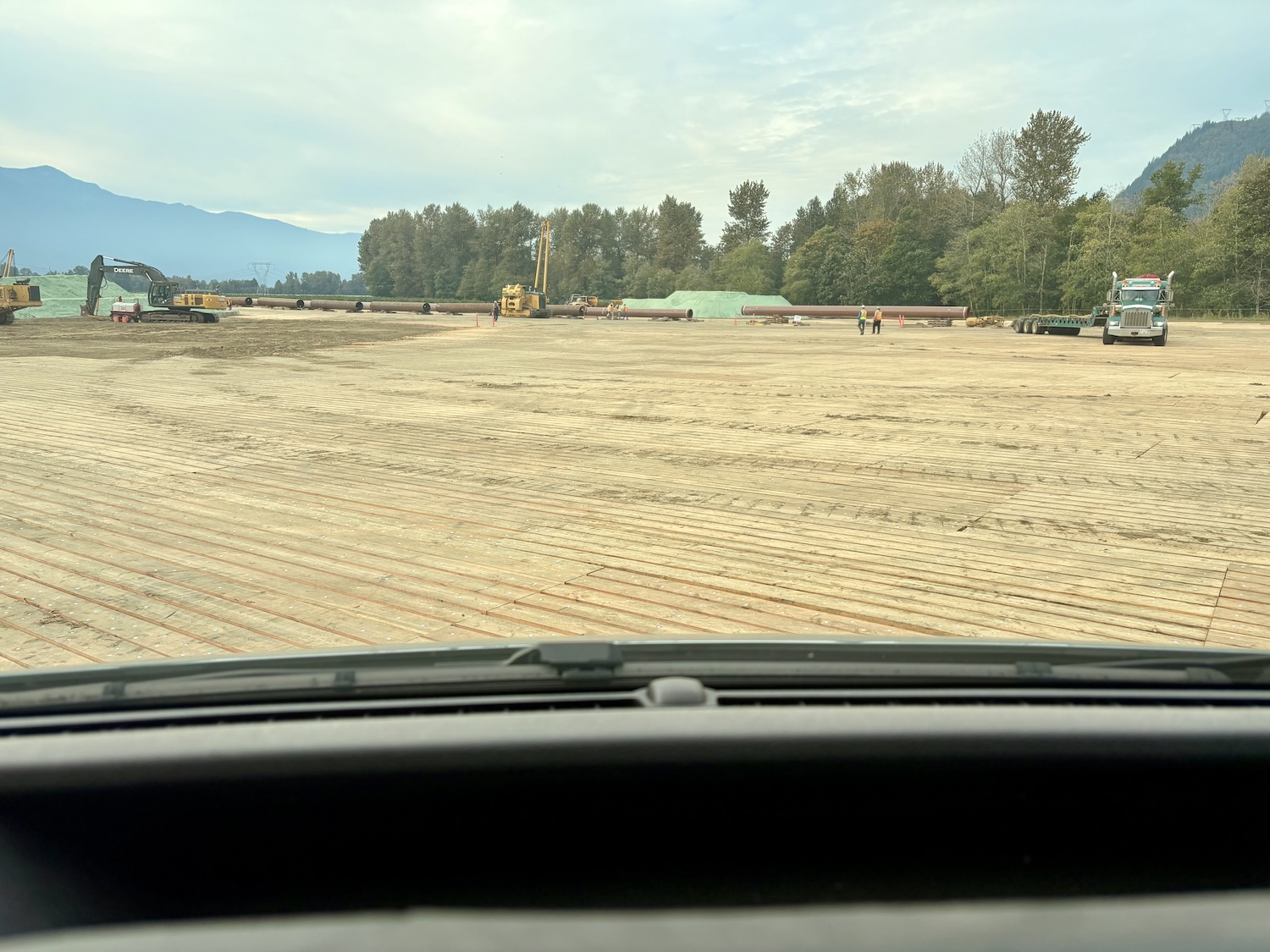
Macro Pipelines was working on a pipeline project near Hope, British Columbia. Pipeline construction regularly places crews around welding fumes, dust and other airborne contaminants, which means respiratory protection is part of everyday work on site.
A respirator only provides the protection it is designed for when it forms an effective seal against the individual wearer's face. Because facial shapes differ, the same make and model can fit one worker properly and not another. Fit testing is how that seal is confirmed for each person.
Sending 25 workers to off-site appointments would have meant travel, scheduling around shifts, and significant time away from an active project. For a crew working to a construction schedule in a remote location, that is expensive in hours before it is expensive in dollars.
The requirement was straightforward: confirm that every worker's respirator fits correctly, and do it without stopping the job.
1. Coordinate the visit
The testing day was scheduled around the project's operations so workers could be tested in groups without interrupting the work front.
2. Bring testing to the site
Clear Work technician Noah arrived at the Hope project site with the mobile unit and the equipment required to complete qualitative respirator fit testing on location.
3. Test the crew
25 workers were fit tested using the hood method. Each worker put on their respirator, a hood was placed over the head, and a harmless test agent was introduced while the worker completed a series of movements. If the test agent cannot be detected, the respirator is maintaining an effective seal.
4. Explain the why, not just the result
Noah talked each worker through what was being checked and why the seal matters, rather than moving people through as quickly as possible.
5. Keep the project moving
Workers returned to their duties directly after testing. No one travelled off site.

“Very detailed and professional. He took the time to explain what he was doing, why each step was important, and especially the importance of getting a proper seal on the respirator. He was thorough, knowledgeable, and made sure everything was done properly instead of just rushing through the test. Great experience overall and I’d definitely recommend him.”
Mobile fit testing removes the coordination problem entirely. Instead of arranging 25 individual appointments around shifts and travel, the testing comes to the crew and the crew stays on site.
It also allows time to be spent where it matters. A fit test that is rushed produces a pass without producing confidence. Taking the time to explain what is being checked, and to confirm the seal properly, is what makes the result meaningful.
Clear Work provides mobile respirator fit testing for employers in pipeline construction, general construction, industrial maintenance, utilities, municipal operations, manufacturing, forestry and other workplaces where workers wear tight-fitting respirators.
Testing is completed on site throughout British Columbia, including the Fraser Valley, the Fraser Canyon and communities further into the Interior.
Yes. Clear Work travels to project sites throughout British Columbia, including locations well outside the Lower Mainland, and completes testing on location.
A fit test typically takes approximately 15 to 20 minutes per worker, depending on the respirator and the individual.
No. Workers must be clean-shaven anywhere the respirator seals against the face. Facial hair along the sealing surface prevents an effective seal and will prevent a successful test.
Testing days are planned around crew size, shift patterns and the available window on site. Larger groups can be scheduled across a longer visit or multiple days.
Fit testing should be repeated whenever a different make, model, style or size of respirator is introduced, and when facial changes could affect the seal. Employers should also follow the requirements of their own respiratory protection program and applicable WorkSafeBC requirements.
The worker puts on their respirator and a hood is placed over the head. A harmless test agent is introduced while the worker completes a series of movements such as talking, turning their head and bending over. If the worker cannot detect the test agent throughout, the respirator is maintaining an effective seal.
If your project has workers who wear tight-fitting respirators, we'll bring the testing to the site. Request an on-site quote from Clear Work.